

Ever feel like sitting under fluorescent lights all day drains the life out of kids? You are not alone. Traditional classrooms are great, but they are only half the story.
When you get kids outside, something shifts. They breathe fresh air, look at real ecosystems, and suddenly, school concepts start making actual sense. Connecting textbooks to the physical world changes everything for a student.
Across Pennsylvania, schools are realizing that nature is the ultimate teaching tool. It is not just about a fun day trip or a break from desks. Taking lessons into the woods fundamentally changes how kids process information, handle stress, and score on tests.
How Outdoor Learning Programs in Pennsylvania Boost Textbook Focus?
It sounds backwards, but leaving the classroom helps kids focus better inside it. Concentrating on whiteboards and screens for hours straight causes major mental fatigue. The brain simply gets tired of filtering out distractions in a cramped room.
Nature works differently. It uses a different kind of attention that actually restores mental energy. When kids spend time in green spaces, their brains reset. They head back to their indoor desks with sharp focus and ready minds.
- Spending time in natural light resets attention spans completely.
- Green spaces naturally lower student cortisol levels and mental stress.
- Kids with ADHD show significantly fewer symptoms after outdoor time.
- Better focus directly translates to fewer behavioral distractions in class.
Turning Abstract Science Lessons Into Real-World Problems
Have you ever tried memorizing the water cycle from a black-and-white diagram? It is incredibly boring and hard to remember. Now, imagine standing by a rushing stream, testing the water pH, and looking at real runoff.
That is where hands-on science shines. When students touch soil, track wildlife, or measure tree growth, science stops being a list of vocab words. It becomes a real story happening right in front of them.
- Students observe local Pennsylvania ecology and food chains firsthand.
- Testing soil and water quality teaches real chemistry concepts.
- Tracking weather patterns makes meteorology tangible instead of abstract.
- Hands-on exploration builds deep critical thinking and observation skills.
Raising the Bar for Student Grades and Test Scores
The data on this might surprise you. Research shows that schools using outdoor components see a real jump in academic performance. This includes higher standardized test scores and better grades in core subjects like math and science.
Why does this happen? Because lessons stick when they are attached to a physical memory. A child might forget a worksheet answer, but they rarely forget the day they built a working water filtration model out of rocks and sand.
Building Essential Social Skills That Textbooks Cannot Teach
A massive part of school success has nothing to do with tests. It is about how kids handle frustration, work in groups, and communicate. You cannot learn grit or leadership by reading a chapter in a book.
Outdoor challenges force kids to communicate clearly. If a youth group is trying to navigate a trail or solve a team puzzle, they have to talk. They learn to listen, argue constructively, and figure things out together.
- Group challenges require immediate cooperation and shared leadership roles.
- Navigating physical trails builds self-reliance and deep personal confidence.
- Overcoming outdoor obstacles teaches kids how to handle failure.
- Stronger social skills create a more supportive, collaborative classroom culture.
Boosting Everyday Attendance and Enthusiasm for School
Let’s be honest, some kids hate going to school. They drag their feet because sitting still all day feels like a chore. Outdoor learning completely flips that script by making school genuinely exciting.
When kids look forward to active, hands-on projects, attendance numbers naturally go up. If a student is excited to check on a biology project in the woods, they show up. Showing up is the first step to doing well.
Bringing Interactive Lessons to Life With Outdoor Programs for Youth Groups
Learning should be active, not passive. Sitting and listening to a lecture only gets you so far. High-quality outdoor programs for youth groups create active learning environments where every single student can find a way to excel.
Not every kid learns best by reading or writing. Some need to build, touch, and see things in motion. Out in the open air, the playing field gets leveled, allowing different types of intelligences to shine.
- Kinesthetic learners thrive by physically moving through their lessons.
- Visual learners absorb information through massive, real-world examples.
- Group dynamics let quiet students step up in practical ways.
- Active learning styles keep kids engaged far longer than lectures.
Linking Nature Directly to Pennsylvania State Education Standards
Outdoor learning is not a random recess. Modern programs tie directly into state guidelines, like the PA STEELS standards. This means every single trail walk and nature activity has a specific academic purpose.
Teachers do not have to choose between hitting curriculum goals and going outside. A good outdoor curriculum integrates the two seamlessly. It reinforces classroom goals while giving kids the freedom to explore.
Why Hands-On Experiences Make Tough Academic Concepts Stick?
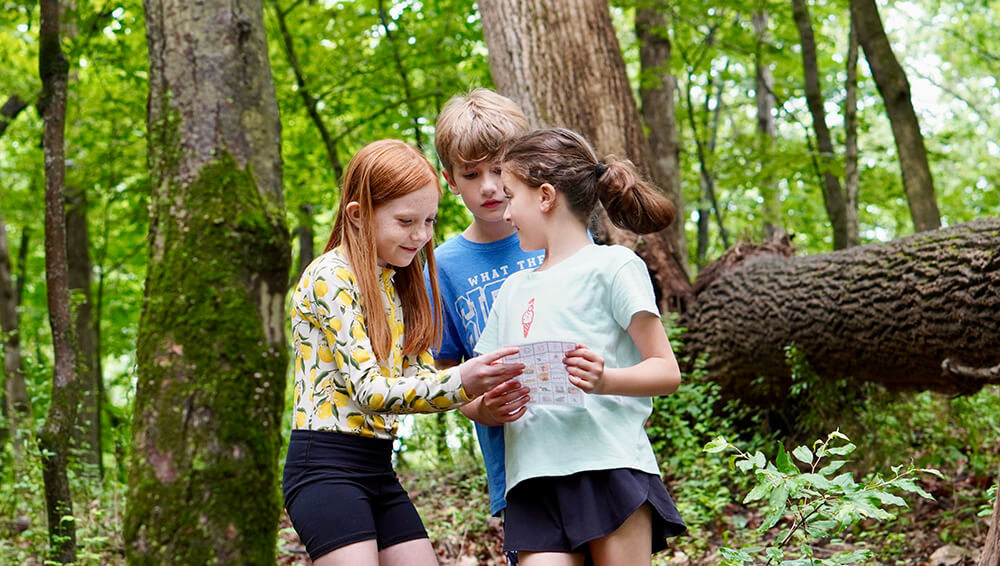
When a child physically interacts with a lesson, it forms stronger neural pathways. They are using multiple senses at once, hearing the wind, smelling the forest, and seeing the wildlife. This sensory involvement builds permanent understanding.
Think about geometry. You can calculate angles on a piece of paper, or you can use tools to map out a physical trail map. The practical application proves the usefulness of math, making kids want to learn more.
- Multi-sensory experiences create lasting memories that improve recall.
- Applying math to real-world mapping makes formulas practical.
- Writing about nature experiences drastically improves descriptive vocabulary.
- Complex environmental concepts become simple when observed directly.
How Our Team At Paradise Farm Camps Connects the Dots?
At Paradise Farm Camps, we see these breakthroughs happen every single day. Across our 600-acre property in Downingtown, we run intentional outdoor learning programs in Pennsylvania that schools rely on to bridge the gap between textbooks and nature. We see firsthand how a few days on our trails can transform a distracted student into a focused team leader.
Our programs are designed to support what teachers are already doing in the classroom. Whether a class is visiting for a single day of ecology studies or spending a week working through team challenges, we focus on real growth. We take the stress out of planning by aligning our outdoor adventures with state educational standards.
We love watching kids step out of their comfort zones, drop their phone screens, and actually engage with the world around them. It is incredible to watch a kid who struggles at a traditional desk suddenly thrive while leading a team through an outdoor puzzle. That is the power of our outdoor programs for youth groups, and it is why we do this work.
Summary of the Core Academic Benefits
| Area of Impact | How It Works | The Direct Result |
| Mental Focus | Natural environments reset attention fatigue and lower stress. | Longer attention spans inside classrooms. |
| Science Grades | Abstract concepts are taught through physical ecosystems. | Higher retention and better test scores. |
| Life Skills | Group problem-solving challenges require real teamwork. | Improved communication and fewer behavior issues. |
FAQs
1. Do outdoor learning programs in Pennsylvania schools really improve test scores?
Yes, they do. Paradise Farm Camps designs programs that align with state standards, and studies show that hands-on outdoor education boosts retention. When kids experience lessons physically, they understand the material better, leading to higher grades and improved performance on standardized tests.
2. How do outdoor programs for youth groups build teamwork skills?
These programs place kids in situations where they must cooperate to solve physical challenges. Whether navigating a trail or completing a group build, they have to communicate and share leadership. This builds practical social skills that transfer directly back to school classrooms.
3. Can outdoor education help students who struggle to focus in class?
Absolutely. Spending time in natural settings significantly reduces mental fatigue and lowers stress hormones. Research shows that natural light and green spaces help reset attention spans. This is especially helpful for students with ADHD, who show improved focus after outdoor activities.
4. Are these outdoor curriculum activities aligned with PA school standards?
Yes, high-quality programs are built to match state curriculum guidelines, including the PA – STEELS standards. Instructors design the activities to reinforce exactly what teachers are covering in the classroom, ensuring the time spent outside is highly educational and purposeful.
5. What age groups benefit the most from learning outside?
Students of all ages benefit from kindergarten through high school. Younger kids develop core motor and observational skills through nature exploration. Meanwhile, older students tackle advanced scientific concepts, environmental chemistry, and complex leadership challenges that prepare them for future academic success.