
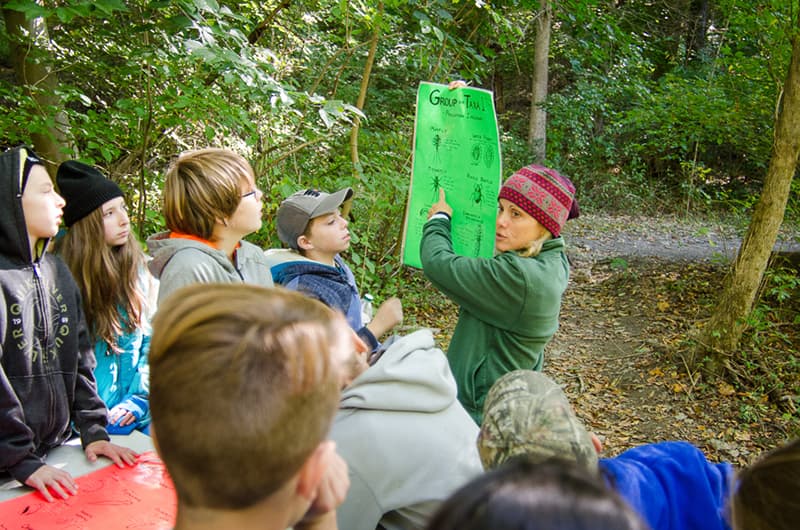
Kids learn plenty when adults give them some room to figure things out. Day and overnight camps create that kind of space through games, group activities, creative work, outdoor time, and friendships. At Paradise Farm Camps, we see it in simple moments throughout the day. A child may walk into an activity feeling unsure, then end up joining in with everyone else. Another camper may have trouble with a game, keep trying, and finally get it right. Those moments matter. Camp gives children a chance to grow while still letting childhood feel like childhood.
How does camp help kids learn through real experiences?
Camp gives children chances to learn while doing something. That can be a game, a group task, a craft, or even a small problem that comes up during the day. Kids have to think, respond, and make choices as the situation unfolds.
We plan activities where children take part instead of simply watching. A team game may require children to listen to one another. A shared project may take patience. A new activity may push a child to give something unfamiliar a real try.
A child often remembers the experience more than the explanation.
That matters because useful skills grow through practice. Children can learn how to solve a problem without waiting for an adult to handle everything. They can learn when to ask for help and when to give something another try.
Some everyday skills camp can help build include:
- Problem-solving during activities and games
- Clear communication with friends and counselors
- Decision-making during daily choices
- Teamwork during group challenges
- Confidence after trying something unfamiliar
We also give children room to make mistakes. A missed turn or failed attempt does not end the activity. Kids get another chance to work it out.
Why is play important for a child’s growth?
Play gives children freedom. Kids can laugh, make up games, change the rules, and come up with ideas that adults might never think about. That freedom has real value.
At Paradise Farm Camps, structured activities are only part of the experience. Children also have moments where play can develop in its own direction. One game can turn into another. A simple idea can become a group activity. Friends can decide what happens next.
This is where children practice social skills without thinking about practicing anything.
A child learns how to take turns. Another learns that shouting may upset the group. Someone else figures out how to settle a disagreement so the game can continue.
How does a camp program make children more confident and independent?
Children become confident when they achieve something that was initially difficult to do. At camp, kids get many opportunities to experience this.
A child might choose to participate in an unfamiliar activity, play a sport, complete a craft project, or even speak in a group game. The initial try is always challenging. The second time is always slightly less challenging.
We support children but do not intervene immediately. Support is important but so is self-effort. A child’s success at solving a problem becomes his or her accomplishment.
Camp can give children practice with:
- Making everyday choices independently
- Trying activities outside a comfort zone
- Speaking up during group situations
- Handling small setbacks
- Asking for help when help is needed
A child may arrive at camp relying heavily on an adult for small decisions. After some time, that same child may start making those choices alone.
That change can be easy to miss. We see it often.
What social skills can children develop at camp?
Camp brings children together for long stretches of the day. That creates plenty of chances to talk, listen, cooperate, and work things out.
At Paradise Farm Camps, group activities are a big part of that process. Children may have to share supplies during a project or work together during a team game. One child may want to lead while another wants something different. Someone has to listen. Someone has to compromise.
Those situations teach children how groups actually work.
Friendships grow there too. Some start quickly. Others take time. A quieter child may watch a group for a while before joining. A friendly invitation can make that step easier.
Children can practice social habits such as:
- Starting conversations with new friends
- Taking turns during group activities
- Listening to different opinions
- Sharing space and equipment
- Working through small disagreements
- Supporting friends during challenges
Moreover, repeated interaction can make social situations feel less intimidating. Children get more comfortable meeting people and joining groups.
How do camp routines help children build healthy habits?
A steady daily routine can give children a sense of comfort. Kids know there is a next activity, a next break, and a next part of the day.
Routine also creates chances for responsibility. Children can remember where personal things belong, follow activity directions, and take care of shared equipment. Those are ordinary tasks, but ordinary tasks are often how independence develops.
Regular movement matters too. Children get time away from desks and screens. They can run, play, explore, and spend time with friends in person.
That kind of routine can make camp feel active without making the day feel exhausting.
Why is there a need for school break camps in the lives of kids and their parents?
The holidays in schools may be challenging for those parents who have busy working lives. Children have plenty of time, but parents have to be somewhere.
School break camps for kids provide children with a place where the day is well-organized and full of activities. They can play, socialize, participate in various projects, and have an opportunity to experience a different environment than the one at school.
We know that children want a holiday from the educational institutions. Meanwhile, parents want the day to be productive. So we find this compromise.
The schedule gives children things to look forward to without making every hour feel like a class. That can make school breaks easier for the whole family.

What should parents check before choosing a camp?
An activity list can tell only part of the story. Parents should also look at what daily life feels like for a child.
Ask about supervision. Find out how groups are arranged. Look at the daily schedule. Learn how staff communicates with families and how safety situations are handled.
At Paradise Farm Camps, we believe these details deserve serious attention because children respond differently to different environments.
One child may enjoy a busy group setting. Another may need time to settle in before joining everyone.
Parents should look at:
- Staff supervision and experience
- Group sizes and age ranges
- Daily schedules and activity choices
- Indoor and outdoor options
- Safety and emergency procedures
- Communication with families
It also helps to think about the child rather than choosing based only on what sounds impressive.
The right fit usually feels comfortable, active, and manageable for the child.
How can camp help kids grow without feeling like more school?
Kids already spend much of the year following school routines. Camp can give them a different way to spend the day.
We connect learning with things children already enjoy. A game can encourage teamwork. A group activity can improve communication. A new challenge can teach patience.
Nobody has to stand at a board and explain the lesson. Children learn while taking part.
That difference can make a big impression. Kids get to move around, talk with friends, make choices, and try things at their own pace. Learning becomes part of the experience instead of becoming another task to finish.
FAQs
1. How does camp build confidence in children?
It is possible to gain confidence in camp through small acts every day. A child may be reluctant to join in a game but eventually finds himself a place within a group after some encouragement. Some other child may have a problem while trying out an activity but persists and finally succeeds. The counselors provide support without interfering. It allows the children to see that they made it by themselves and encourages them to try again next time.
2. What skills do children gain through camp activities?
Camp offers many skills which the children gain without being taught at school. Summer camp activities include learning how to work together, communicate, wait for your turn, solve problems and make simple decisions. All these skills can be gained during different games and tasks within groups.
3. Are day and overnight camps helpful for social development?
Spending a full day around other children creates plenty of natural chances to build social skills. Day and overnight camps give kids time to talk, play, work together, and make new friends. Counselors help when a child needs support, while friendships are allowed to develop at their own pace. With regular group interaction, children often become more comfortable around unfamiliar people.
4. What factors should be taken into account when choosing the camp?
It would not be the wisest choice to choose one camp rather than another based on the activities. The important factors include the quantity and qualifications of staff members, the supervision process, group size, safety measures, schedule, communication with families, etc. One should also keep in mind that each child has their own character and responds differently to the new environment.
5. Can camp help children become more independent?
Yes, camp can give children plenty of practice handling simple things on their own. A camper may keep track of personal belongings, choose an activity, join a new group, or try solving a problem before asking an adult for help. Counselors remain close while giving children room to take responsibility. Those small decisions can help kids feel more capable as time goes on.